

By Alhassan Hassan Abba
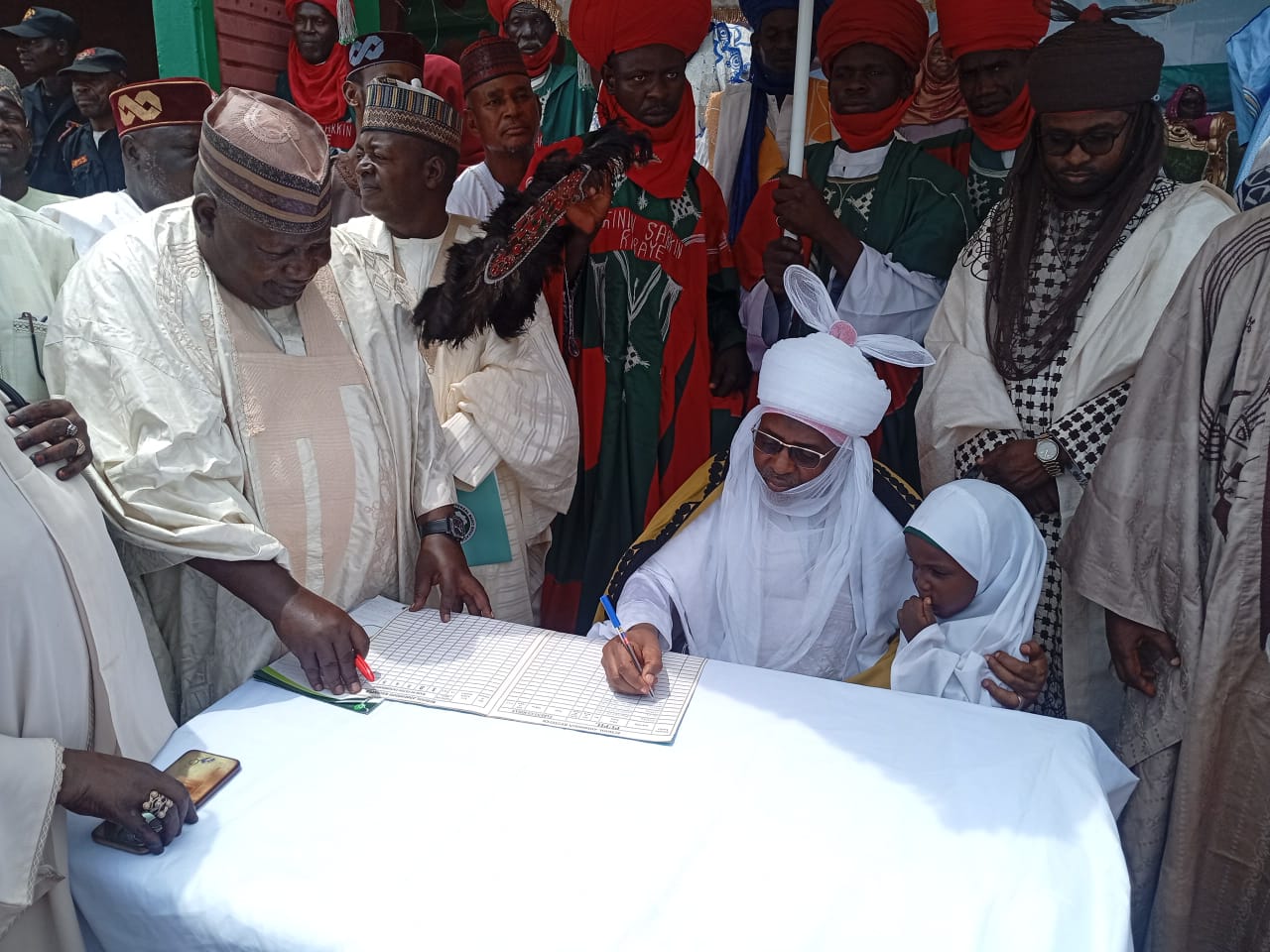
The Emir of Karaye, His Highness Muhammad Maharaz, has called on the Universal Basic Education Commission (UBEC), the Kano State Universal Basic Education Board (SUBEB), and other stakeholders to strengthen Nomadic Education to ensure that children in nomadic communities have access to quality basic education.
The Emir made the call during the 2026/2027 State-wide Enrolment Drive Campaign held at the Karaye Emirate Council.
His Highness Muhammad Maharaz emphasized that improving Nomadic Education would contribute significantly to strengthening security and reducing the number of out-of-school children in the state and the country.
He also called on governors across Northern Nigeria to give greater attention to Nomadic Education and ensure that children in nomadic communities have access to quality education wherever they reside.
The Emir further called for greater collaboration among stakeholders to improve Qur’anic education, stressing that there was no need for parents to send their children outside their states or communities in search of Qur’anic education.
According to him, Qur’anic education can be provided alongside Western education, a development he said would help reduce the number of out-of-school children while providing them with broader educational opportunities.
His Highness Muhammad Maharaz subsequently directed District Heads, Village Heads, Ward Heads, and Imams across the Karaye Emirate to support the campaign by mobilising their communities and encouraging parents to enrol their children in school.
He also commended UBEC, SUBEB, and other stakeholders for choosing Karaye Emirate to host the flag-off ceremony.
Speaking on behalf of the Executive Secretary of UBEC, the Kano State Coordinator, Malam Abdulrahman Musa, said the campaign was aimed at mobilising parents and communities to enrol children aged 6 to 11 years and facilitate the return of out-of-school children to classrooms across the 44 Local Government Education Authorities in the state.
Also speaking, the Commissioner for Education, Dr. Ali Haruna Makoda, represented by the Special Adviser to the Executive Governor on Education, Malam Haladu Muhammad, called on communities, parents, traditional institutions, and other stakeholders to join hands in ensuring that all out-of-school children return to school.
He urged stakeholders to ensure that every child who has attained the age of six and is ready for Primary One is enrolled at the appropriate age.
The Commissioner said the initiative aligns with the vision of the Kano State Government under the leadership of Governor Abba Kabir Yusuf, assuring that the Ministry would continue to work with communities and traditional institutions to sustain the gains recorded in the education sector and take them to greater heights.
In her remarks, the Guest Speaker, Prof. Aisha Abdul Ismail, urged stakeholders to identify and address the challenges responsible for keeping children out of school.
She stressed the need to ensure that children who are enrolled remain in school until completion, calling for greater attention to girls, children with disabilities, and other underserved and vulnerable groups.
Prof. Aisha noted that effective collaboration among schools, Local Government Councils, traditional leaders, parents, and communities was essential to achieving universal enrolment, retention, and completion of basic education.
In separate remarks, representatives of the Kano State Accountability Forum for Education (K-SAFE), School-Based Management Committees (SBMCs), and Parent-Teacher Associations (PTAs) assured the organisers of their support for the campaign.
They pledged to mobilise parents and communities to enrol their children in school and encourage out-of-school children to return to the classroom.
In his vote of thanks, the Acting Chairman of SUBEB and Commissioner I, Hon. Wada Ibrahim Daho, called on parents and members of the public to support the campaign by enrolling their wards in school.
Hon. Daho commended Governor Abba Kabir Yusuf for his commitment to improving education in Kano State through the construction of new schools and classrooms, renovation of existing facilities, provision of furniture and teaching materials, as well as the prompt payment of salaries and promotion of teachers and non-teaching staff.
He urged all stakeholders to complement the government’s efforts by ensuring that every school-age child in Kano State has access to quality basic education.