

By Muhammad Hamisu Abdullahi
The minister of information and national orientation, Alhaji Muhammad Idris Malagi has said that misinformation and disinformation are weapons capable of inflaming tensions, undermining trust, discouraging investment and even threatening national security.
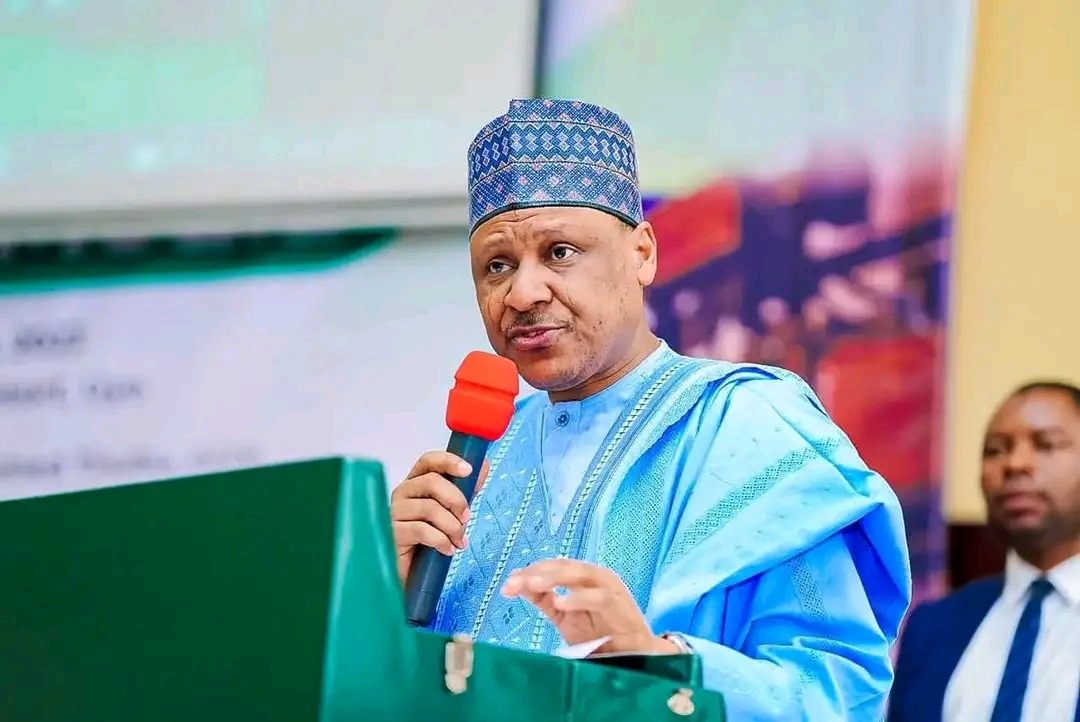
The minister spoke in his keynote address at the just concluded Arewa Media Summit held Coronation Hall, Government House Kano on Monday.
He said the above reasons had made professional journalisms as less important in the society.
Alhaji Malagi told the gathering that enduring strength of journalism lies in its commitment to accuracy, fairness, verification, balance and responsibility.
He said credible journalism must continue to distinguish itself from rumour, propaganda and sensationalism.
He urged the media to continue to hold government accountable, saying that constitutional responsibility remains indispensable to the nation’s democracy, but adding that accountability was strongest when it was anchored on facts, context and fairness.
He described the summit as both timely and significant, saying that the theme of the event, ‘Government-Citizen Accord: Accountability, Responsibility and Ethical Media Practice,’ could not be more appropriate.
Alhaji Malagi said the event reminds the participants that democracy functions best when government was accountable to the people, citizens participate responsibly in national development and the media performs its constitutional role with professionalism, fairness and integrity.
“These three pillars are not competing interests; they are partners in building a peaceful, prosperous and united Nigeria,” he said.
He described the state as commercial hub of the country, stating that it possesses one of the country’s most vibrant media landscapes.
He noted: “It has the largest concentration of radio stations in the region, with community radio stations serving millions of listeners daily in Hausa and other indigenous languages.”
On President Bola Ahmed Tinubu’s administration, the minister said, the administration remains firmly committed to upholding press freedom as a fundamental pillar of constitutional democracy.
“We recognise that a free, responsible and independent press is indispensable to good governance, transparency and public accountability.
“Our commitment is reflected in our continuous engagement with media stakeholders, our determination to foster an enabling environment in which journalists can carry out their professional duties without undue interference and our resolve to deepen constructive dialogue between government and the media,” he said.
He said Tinubu’s commitment has been demonstrated through unprecedented engagement between himself and the nation’s media, including regular interactions and the recently inaugurated State House Press Corps Annual Briefing and Luncheon, which had opened a new chapter in strengthening mutual trust and understanding.
He said: “We believe that democracy flourishes when citizens are well informed, diverse opinions are respected and the media is able to perform its watchdog role with professionalism, responsibility and fidelity to the truth.”
He added: “While we must report challenges honestly, we must also recognise genuine progress wherever it occurs.
“Nations are not defined solely by their difficulties, nor do they advance by ignoring them. They progress when truth is reported in its entirety.
“Undoubtedly, Northern Nigeria is far more than insecurity.
“It is a region of entrepreneurs building successful businesses, farmers feeding the nation, researchers making new discoveries, innovators developing digital solutions, artists promoting our culture and young people transforming their communities every day.”
According to him, the stories deserve prominence alongside the headlines about conflict, adding that they present a fuller and more accurate picture of Northern region.
He said balanced journalism requires the journalists to examine national realities in their entirety.
While the media must scrutinise public policy and report challenges without fear or favour, he said, it must also give fair attention to genuine progress wherever it occurs.
“It is in that spirit that I wish to highlight some of the significant strides being made under the Renewed Hope Agenda.
“Under the leadership of His Excellency, President Bola Ahmed Tinubu, GCFR, Nigeria has embarked upon far-reaching reforms aimed at restoring economic stability, strengthening national security and laying the foundations for long-term prosperity.
“These reforms have required courage, discipline and foresight.
“Necessary economic decisions have strengthened public finances, improved fiscal sustainability and renewed investor confidence.
“Across the country, strategic investments are reconnecting markets, expanding infrastructure and unlocking new opportunities for inclusive growth,” said the minister.
Alhaji Malagi said, for Northern Nigeria, the investments are especially significant, pointing out that President Tinubu’s Four Legacy Highway Projects constitute the largest highway infrastructure programme ever undertaken by a civilian administration in the country.
He said together, they were opening new economic corridors, strengthening national integration, reducing transport costs and connecting producers to domestic, regional and international markets.
“The Sokoto–Badagry Super Highway, in particular, promises to transform trade across several northern states by linking agricultural belts with industrial and export corridors.
“The renewed construction of the Abuja–Kaduna–Kano Expressway, alongside continuing investments in rail infrastructure, dry ports, energy projects and logistics networks, will significantly enhance the competitiveness of Northern Nigeria and stimulate private-sector investment.
“The establishment of the Federal Ministry of Regional Development has further strengthened the coordination of development initiatives through the regional development commissions, ensuring that interventions are tailored to the unique needs and comparative advantages of every geopolitical zone.
“Equally transformative is the establishment of the Federal Ministry of Livestock Development. Livestock remains one of Northern Nigeria’s greatest economic assets.
“Modernising the sector through improved animal health, ranching systems, value-chain development, processing facilities and export promotion will create jobs, improve food security, increase foreign exchange earnings and reduce resource-based conflicts,” he explained.
He then thanked the convener of the event, the Senior Special Assistant to the President on Media and Public Enlightenment, Malam Abdulaziz Abdulaziz for bringing together journalists, broadcasters, filmmakers, digital creators, academics, communication professionals and policymakers to reflect on the future of media in Northern part of the country.
In his welcome address, the convener of the summit, Malam Abdulaziz said the summit was convoked in the spirit of Tinubu’s administration’s commitment to free speech, dialogue and deepening democracy.
He said it was designed to interrogate the often contentious two-way traffic that was the relationship between leaders and the led in a democracy.
President Tinubu, he said, being a veteran of the democratic struggle, was an unavowed believer in plurality of opinion and guaranteed place of free expression and dialogue.
“This summit, therefore, aggregates a wide-spectrum of stakeholders and different shades of opinions in the media and information ecosystem in Northern Nigeria.
“As can be seen in the composition of our three panels, so it is in the nature of the audience.
“While we cannot bring everyone who should be here, or wanted to be here, we have tried to reflect the plurality of Northern Nigeria with every state having representations,” he stated .
He said the state had always led by example – from the hustle of its markets and the voices of its broadcasters to its attention-grabbing politics.
“Today, Governor Abba Kabir Yusuf is changing the face of Kano and repositioning its place within the Nigerian socio-economic landscape,” he said.
He added: “Let this summit be where we agree on a simple code: government will open more doors, citizens will demand with civility, media and influencers will report with integrity.”